Ever glance at your dashboard and see a mysterious glowing icon and think, “What does that mean?” You’re not alone. Dashboard warning lights are among the most misunderstood aspects of vehicle ownership. A recent survey found that over half of drivers find these lights confusing, and many admit to ignoring them altogether, even when they signal serious issues.
Understanding these symbols isn’t just helpful; it could save you thousands in repairs or prevent a dangerous roadside breakdown. KC Automotive is here to help! Let’s break down how to read those dashboard warning lights, what the colors mean, and what actions you should take when they illuminate.
Why Dashboard Lights Matter
Dashboard lights are your car’s way of communicating with you. They monitor dozens of systems, from engine health and tire pressure to safety systems such as airbags and traction control. When something doesn’t operate as expected, your car displays a symbol.
But here’s the kicker: not all lights are equal. Some indicate that a feature is active, while others signal that something needs immediate attention. Knowing the difference is key to both safety and avoiding costly repairs. Diagnosing the issue is an important first step to fixing a dashboard indicator light.
Understanding the Color Code
Most vehicles use a traffic light-style color system for dashboard warnings:
Red Lights – Stop or Danger
Red icons indicate a serious problem or safety concern, like a red light at an intersection. These warn of critical issues such as:
- Engine overheating
- Oil pressure loss
- Brake system fault
If you see a red light, pull over as soon as it’s safe and turn off the engine. Ignoring red warnings could cause significant mechanical damage or put you at risk on the road.
Yellow or Amber Lights – Caution
Yellow or amber icons indicate a condition that requires attention but isn’t immediately catastrophic.
- Check Engine Light
- Tire Pressure Monitoring System (TPMS) warning
- Traction control alerts
These should not be ignored, but they often allow you to drive briefly while you arrange service, but don’t wait too long. Prolonged neglect can lead to bigger issues.
Green or Blue Lights – Informational
These colors typically indicate that the system is active and operating as expected, indicating no issues.
- Headlights on
- Cruise control active
- Turn signals blinking
Green and blue aren’t warnings; they’re confirmations.
Common Dashboard Warning Lights and What They Mean
Here’s a quick reference to some of the most common dashboard icons and what they typically mean:
Check Engine – Malfunction Indicator Light
This light can indicate a range of issues, from a loose gas cap to an emission problem. It’s one of the most common, yet also the most general, warnings. A diagnostic scan can pinpoint the actual cause.
Oil Pressure Warning Light
Looks like an old oil can. If it lights up red, you likely have a serious oil pressure problem. Stop driving and check your oil level immediately. Don’t risk engine damage! Get oil changes scheduled according to your manufacturer’s recommendations.
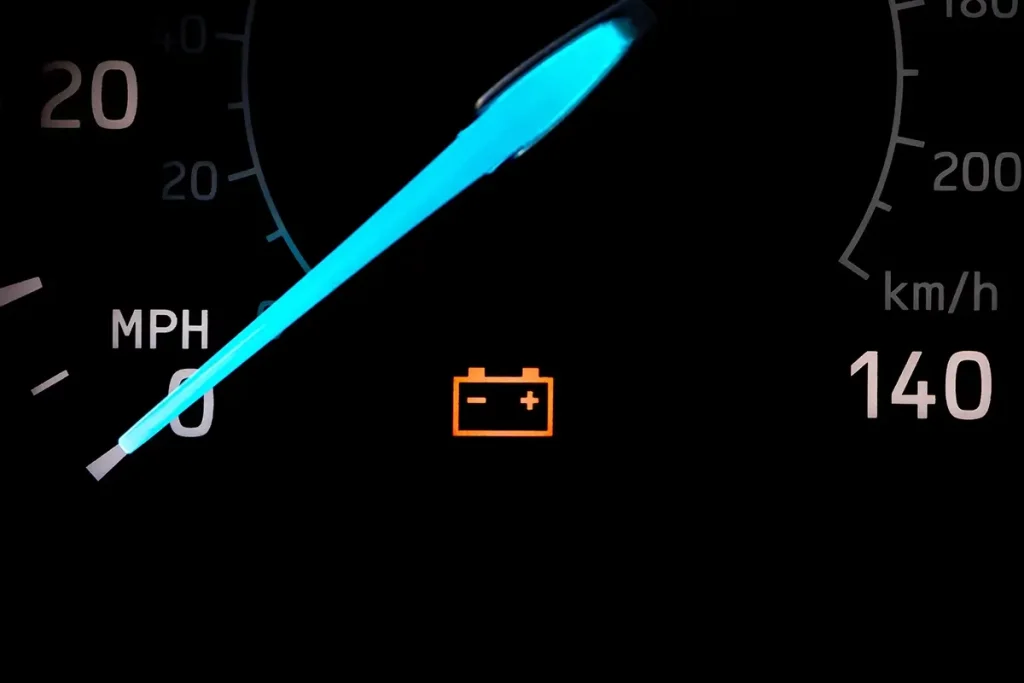
Battery or Charging System Alert
If this icon appears, your battery might not be charging correctly. This could be due to a failing alternator, battery, or connection issue. Please don’t ignore it! Once the battery dies, your car won’t run.
Engine Temperature Warning
Often shown as a thermometer icon, this light indicates that your engine is overheating. Pull over safely and let it cool before checking coolant levels. Engine services can be costly! Don’t let your engine overheat to avoid the cost of engine services.
Tire Pressure Monitoring System (TPMS)
Appears when one or more tires are underinflated, a common issue in cold weather. Low tire pressure affects handling and fuel efficiency; address it promptly. We offer a wide range of tire services at KC Automotive.
Brake System Warning
This could mean your parking brake is on, brake fluid is low, or there’s a more serious brake issue. Brakes are critical to your car. Make sure you get brake inspections and services right away.
What to Do When a Light Pops On
- Check the color first. It tells you how urgent the issue is.
- Don’t panic, but don’t ignore it. Some lights mean immediate action; others can wait a short while.
- Consult your owner’s manual. It will show exactly what each icon means for your specific make and model.
- When in doubt, call the experts. Early diagnosis can prevent more costly repairs.
Need Help Decoding a Light? KC Automotive Can Help!
Dashboard warning lights are your car’s early warning system. Understanding them can improve safety and extend your vehicle’s lifespan. But if a light stays on and you’re not sure what it means, that’s where KC Automotive steps in.
Whether it’s a simple sensor alert or a more profound diagnostic concern, our team in Burke, VA, has the tools and experience to interpret your warning lights and get you back on the road with confidence.
Contact us to schedule a diagnostic appointment today and keep your vehicle running at its best!